


 LATEST NEWS:
English
05.10.2023
 10:25:00
MOUNTAIN WITHOUT CHILDREN - REMEMBERING KOZARA PEOPLE
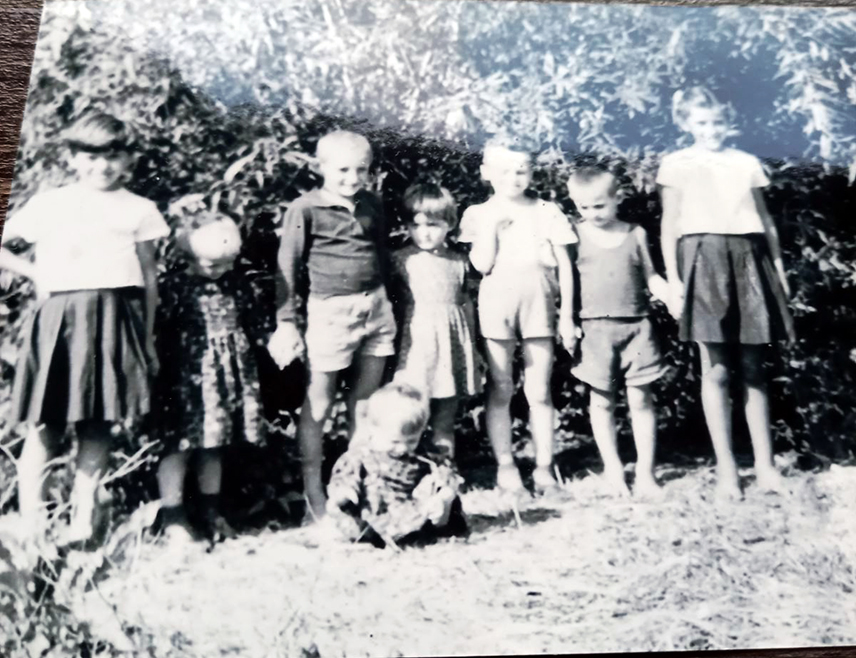
The people of Kozara lived their lives in the breaks of the "long movement between slaughter and plowing", as writer and Nobel laureate Ivo Andrić wrote, speaking about the history by. Written by: Nenad TADIĆ "Are you coming, my dear child?" /Petar Kočić/
BIJELJINA, OCTOBER 5 /SRNA/ - For the family Pralica from Kozara, as well as for thousands of other families from that region, history had a circular flow - from refuge to refuge, i.e. they remained in exile from birth to death. SILENCE ABOUT HATE AND CRIME In 1942, the Germans organised the "cleansing" of Kozara, i.e. the crushing of the uprising of the Serb population that was saving its lives in the Ustasha Independent State of Croatia /NDH/, where they ended up neither guilty nor liable. The Croatia’s Ustashas were furiously and with inexhaustible hatred and contempt in the most obscure ways, burning down Serb villages on Kozara and torturing people. Women and children were like cattle /they killed real cattle in barns and in the meadows, because they were Serb-owned, i.e. owned by "schismatics"/ forced to the convoys to Jasenovac and other prison camps. All this was followed by death from typhus, which always kills hungry, tired and victims exposed to poor hygiene. The last scourge was the post-war government, and above all the Serb communists who, with a veil of forgetfulness, along with a few stone memorials, "anointed" tens and tens of thousands of killed and mutilated Kozara residents and offered them to the biggest national self-lie and the ideological mantra of Yugoslavia, according to which all were equally victims and executioners. The blame for the genocide against the Serbs /the first male child in the villages of Kozara became eligible for the army only 17-18 years after the war/ is borne by the Croatia's Ustashas and the German war hordes, but the blame for the ideological cover-up and "equalization" of guilt in the decades that followed, rather of all, is borne by the Serb politicians in Yugoslavia. Suffice it to say that the Kozara villages received electricity only decades after they first ceased to exist in the fire of national and religious hatred. At the same time, the places in western Herzegovina, from where the most extreme Ustasha members and the biggest criminals were recruited, already looked like a rich foreign country in comparison to the forgotten Kozara with the money of the diaspora and with the blessing of the government. THE FATE OF THE ZLOJUTRO AND PRALICA FAMILIES Memories and stories about the massacre, arson and ranting by the Ustasha against women and children are still a nightmare for the descendants of Kozara people. The arrival of the Ustasha's "Black Legion" and the maddened roar at the door of the unhappy family still flash in the memory: "Zlojutro /Bad Morning/, you've had a really bad morning!". The story of the Pralicas from the village of Kadin Jelovac is one of countless painful stories about the Serbs of that region, who went to bed to the chirping of forest birds, but got up to the barking of machine guns and knives at their necks. LJubomir and Draginja Pralica got married /started to live together/ as, using modern vocabulary, teenagers. This was common for the poorer rural societies of that era. Ljubomir was killed by Germans or Ustasha during the struggle on Kozara. At the time of his death, he was 28 years old, with four living children and one dead. Draginja died of typhus, being in refuge with her three children thinking of one who was participating in the war and was about as tall as the rifle he was carrying. The two of them had five children, but some of them were not registered, which was either due to the lack of funds to register them in the municipality as required by law, or due to the fact that the deaths of newborns were a frequent occurrence. They had daughter Desanka, who probably lived long enough to get a name, then Ankica, who lived 15 years longer than her unfortunate sister and died of tuberculosis, which she got while fighting on Kozara as a "courier". TALL AND BEAUTIFUL WOMAN FROM JASENOVC The third child - Milena, survived the war and ended up in Jasenovac with her youngest brother, Milan, for a short time. They drank ox urine instead of water and water from puddles. "A beautiful tall woman", as Milena described her, will register them with several thousand other children, mostly from Kozara, and take them to Zagreb to foster families. That beautiful and tall woman, who saved their lives, was most likely Diana Budisavljević. But Milena and her brother never found out because of the ideology of the time. After the war, the new government will take away all the lists of children with their identification data from Diana Budisavljević and hide them from the public, leaving tens of thousands of children to live in delusion about their origin or to make them search through various newspaper ads. Some children had the misfortune of being placed in homes with Catholic nuns or in improvised "reception" camps, i.e. fate according to the principle - whoever is small and weak will die, and whoever can survive hunger and dirt will have a future. Milena was old enough to at least know who she was, and little Milan won't remember anything even when they were relocated after the war /there were several "relocations"/, her to another family, and him to some shelter organised by the post-war authorities from where any trace pf him has vanished. Milena will spend her childhood and youth in homes and countless foster homes, and started working at the age of 14 in order to support herself. Obrad, the second brother, will be found 15 years after the war through a random ad that at that time began with the famous: "My name is so-and-so... I am looking for so-and-so... Please, if anyone has heard..." . MEETING ON THE TRAIN Obrad returned to the village after the war. Physically and mentally still a child, he started from the beginning, repeating the biography of his father. He somehow built a house in Jelovac, on the lace of the burned one. He married Marica early, as Ljubomir once married Draginja. Repeating the path of his family, Obrad gave his children the names of sisters Milena and Ankica and brother Milan. Later, he too, overwhelmed by poverty and the carelessness of society, will take his family and go to elsewhere for better life. But he never really left Jelovac and Kozara, because one cannot run away from own destiny. Like Buendia in Márquez's novel "One Hundred Years of Solitude", who for generations repeat the fates of their ancestors, he also remained forever the spirit of the place where he was conceived. Obrad's only meeting with his other sister Ankica, right after the war, on a local train near today's Kozarska Dubica, is a paradigm of the fate of Serbs of those areas. Little Obrad and the slightly older Ankica, who survived hell as a child warrior, were brought together by an angel or devil during those few hours of travel. Brother and sister did not know each other, so they could not even recognize each other. One was too young to remember, and the other /Ankica/ only knew her sister Milena. "You resemble my brother as they described him to me," said Ankica, taking care of that rogue who, like thousands of similar ones, wandered around the Kozara region after the war, asking about his roots. Only after he described to the surviving villagers his encounter with the girl who gave him food did Obrad find out that it was his sister. They passed irrevocably, because Ankica did not live long. They did not meet when they were looking for each other, and they were brought together briefly by a train - as a gift or a mockery of fate. ADOPTED MULTIPLE TIMES Milena and Obrad found Milan decades later. But not through some state body or family reunification system, which were never institutionally provided for in Yugoslavia, but through newspaper ads, as they found themselves. Milan lived around the world searching for his roots for years, and settled in Međimurje. He had several disappointing attempts to find his family roots and was an "adopted son" for a long time. He never spoke about his life across the border, but he gave a gold and rare Dupont lighter to the family of his sister Milena, the same one whom he was separated from and whom, even after they were reunited, he looked at with a certain suspicion, not believing that he was finally returned with his own family. The newly united the Pralice Family will again, but now forever, be separated by a new war. Descendants will emigrate to Sweden to seek their fortune, repeating, in a way, the fate of their parents, but at least alive. BETWEEN SLAUGHTER AND PLOWING Obrad remained separated from part of his family and returned to Dubica, at the foot of Kozara, to at least end up where he was born. Milena will complete her lifetime in a new exile. In the end, as in the beginning, in other people's houses with a couple of bundles, ill. She was waiting for rescue, but not from a "beautiful and tall woman from Jasenovac", but from a "white angel", who, as she said, promised to take her "when the time comes". Milan, as an internal emigrant and an exile since childhood, will stay with his family in Croatia, refusing to be forced to leave again... This is how the people of Kozara lived their lives between death, escape and mutual search. They spent their lives in the breaks of the "long movement between slaughter and plowing", as writer and Nobel laureate Ivo Andrić wrote, speaking about the history of Serbs. "Kozara is beautiful and green, But covered in our blood. Oh, girl, dear soul of mine!"
English
6 hours ago

DODIK PRAISES ROLE OF SERBIAN LIST IN PRESERVING SERB UNITY IN KOSOVO AND METOHIJA
BANJA LUKA, JUNE 8 /SRNA/ – SNSD President Milorad Dodik congratulated Zlatan Elek and the Serbian List on another convincing victory and the strong s...
7 hours ago
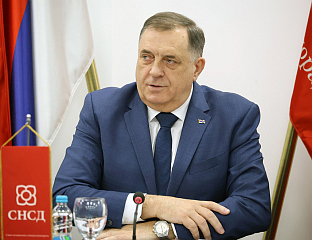
DODIK: JASENKO TODOROVIĆ CASE REFLECTS PRESSURE ON MEDIA FREEDOMS
BANJA LUKA, JUNE 8 /SRNA/ – SNSD President Milorad Dodik said that the questioning of journalist Jasenko Todorović over his role as host of a televisi...
8 hours ago
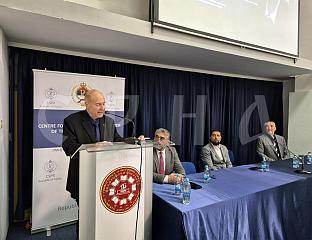
CONFERENCE ON HOLOCAUST AND GENOCIDE AGAINST SERBS IN NDH OPENS IN ISTOČNO SARAJEVO
PALE, JUNE 8 /SRNA/ – A scientific conference on the Holocaust and the genocide against Serbs in NDH opened today at the Faculty of Philosophy of the...
9 hours ago
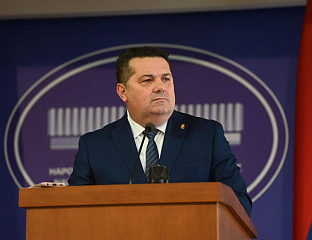
STEVANDIĆ: SUPPORT FOR JASENKO TODOROVIĆ MARKS THE LINE BETWEEN REASON AND MADNESS
BANJA LUKA, JUNE 8 /SRNA/ – Republika Srpska National Assembly Speaker Nenad Stevandić said that supporting Radio-Television of Republika Srpska journ...
9 hours ago
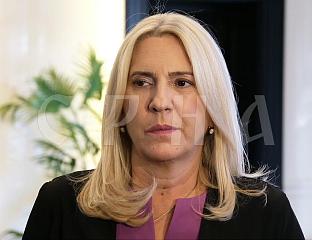
CVIJANOVIĆ: BiH LACKS RULE OF LAW AND FREEDOM OF SPEECH - SUPPORT FOR JASENKO TODOROVIĆ
ISTOČNO SARAJEVO, JUNE 8 /SRNA/ – The Serb member of the BiH Presidency Željka Cvijanović expressed full support for Radio-Television of Republika Srp...
10 hours ago
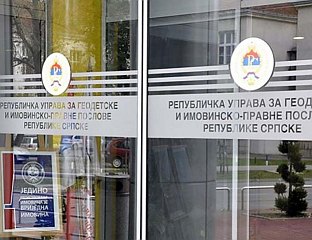
GEOPOL ANALYSIS ON BiH STATE PROPERTY INCOMPATIBLE WITH CONSTITUTIONS AND INTERNATIONAL LAW
BANJA LUKA, JUNE 8 /SRNA/ – Claims made by the Center for Geopolitical Research /Geopol/ regarding a proposed legal framework on state property in BiH...