



 LATEST NEWS:
English
01.10.2023
 10:24:00
KUKOLJ: IN JASENOVEC, I SAW USTASHA THROWING CHILD ALIVE TO DOGS
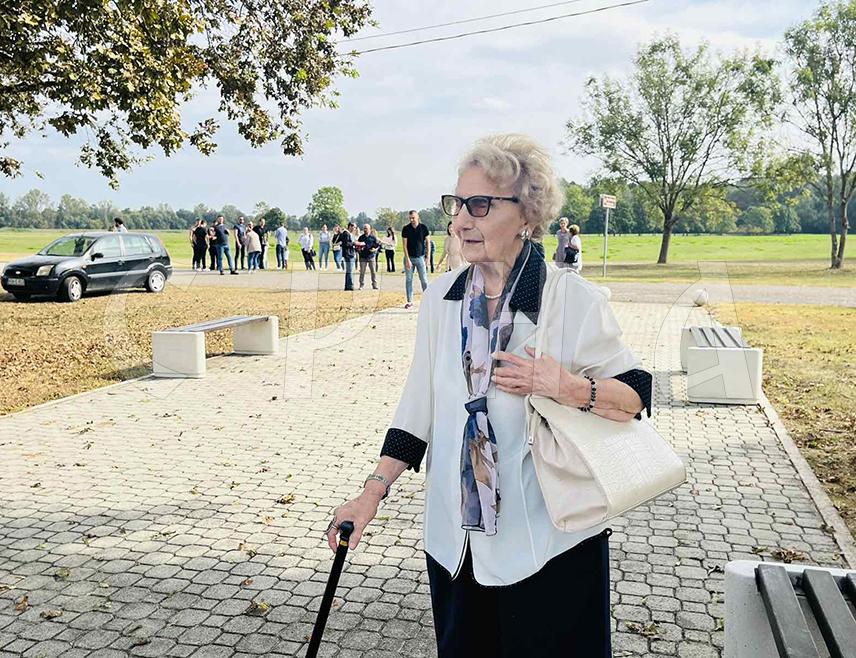
In front of me, a woman with a one-year-old child in her arms, they take the child away from her, she cries, fights, beats herself, but when the Ustashas took the child away, they impaled it on a bayonet and threw it to the dogs, who tore it apart while it was still alive. while they finished off their mother with riffle butts and knives, says Dobrila Kukolj, who as an eleven-year-old girl went through the Golgotha of Jasenovac.
Interviewed by: Milomir SAVIĆ BANJALUKA, OCTOBER 1 /SRNA/ - Dobrila Kukolj from the village of Međeđa near Kozarska Dubica in 1942 in Jasenovac watched with her own eyes how the Ustasha threw a live one-year-old child to the dogs, she cannot forget that horror for decades and she starts her testimony of the Jasenovac concentration camp with that story. "In front of me, a woman with a one-year-old child in her arms, they take the child away from her, she cries, fights, beats herself, but when the Ustashas took the child away, they impaled it on a bayonet and threw it to the dogs, who tore it apart while still being alive, while they finished off the mother with riffle butts and knives," ninety-two-year-old Dobrila tells SRNA. According to her, from the Cerovljani concentration camp, captured Serbs, women, children and elderly people from Kozara arrived at the Jasenovac concentration camp, at the entrance of which was written "Ustasha service" and "Long live Ante Pavelić!". "On both sides, we pass in a convoy through a barricade of black-shirted men who search to see if anyone has any belongings. Then there is the sorting of male children and separation from their mothers, crying, sadness and fear," Kukolj remembers through tears. She also remembers that after entering the camp, they placed her with the others on the bare ground, it was summer - July. "The sun is burning from all sides, we don't move, we yawn like birds looking for some water, but there is none," says Kukolj. According to her, the Ustasha placed a tree log and a sledgehammer with an ax right on the shore. "When someone happens to pass by or if they notice something, they take him away and brutally kill him and throw his body into the Sava. I remember my mother's words not to go near the Sava," says Kukolj. She adds that they were taken to the camp in the clothes in which they were forced out of the house and that they had nothing at the time. "While there was grass around, I plucked and cried. On the third day, we got some cans of cornmeal in lukewarm water. I ate it, and sister Jagoda started vomiting and threw the can away. The next day we all got sick, especially the children, with moaning, in the end they died of exhaustion," says Kukolj. GUARDS BROKE GOJKO BATAJIĆ'S ARM BECAUSE OF THE BREAD CRUST, HE WAS SAVED BY A GOOD WOMAN Dobrila stated that her uncle Gojko Batajić, who survived thanks to a good woman who took him with her to a village, and later to Slavonski Brod, while they were in the Jasenovac camp, the guards broke his right arm up to the elbow for a crust of bread. According to her, when she saw him for the first time after that in 1952, he did not have that part of his hand. "I watched every day how the freight wagons came and how the Ustasha drove out people, women and children who were crying and wailing, while they snatched their bundles and drove them further into the barracks that had already been built," says Kukolj. According to her, the Ustashas forced her mother and other women to do forced labor in the morning, and returned them in the evening, and at that time the kukuzar beans, which were already ripe, were being harvested. "In one of the evenings, one of the women who went to work with my mother began to wail at the top of her voice, saying that she could not take it anymore because she was passing by her house, but in vain, they all had to work under the watchful guard of the Ustasha. My mother told her to keep quiet because the Ustasha would hear her. And they heard her, grabbed her and took her to the Sava River, killed her with a hammer and threw her into the water," Dobrila remembers. According to her, one day they were driven out under the escort of Ustasha to the railway station, where they were packed into cattle cars, packed together so that they could barely breathe, hungry and thirsty. "Then the Ustasha asked if we wanted water and if we were thirsty? I managed to push through to the door of the wagon and see how the villains were washing themselves up to the waist with soap and after bathing they offered us to drink the soapy water in the bowls," says Dobrila. IN ORDER TO SURVIVE, SHE DRINKS DIRTY WATER WITH SOAP She points out that she drank that dirty water, because there was no other choice, and that they saw a little light through the small window when the wagons set off. "They brought us to Sisak, we stood there for a long time, and crying and wailing did not help. After standing for a long time, they started us, and most of us remained. They took us back to Jasenovac and continued to Pakrac," Kukolj continues the story. According to her, hers and other families were destroyed by the war in 1941, when the authorities of the Independent State of Croatia (NDH) immediately started taking men and women to forced labor and arresting prominent Serb notaries, teachers and priests. "The first Ustasha attack on my village was in the summer of 1941, when my family and I left the village. In this attack, the Ustasha caught my aunt Petra Batajić, raped and slaughtered her, and then they also slaughtered Sreta Šolaja, Marko Milanović." , Kukolj remembers. She also testifies that the Ustashas from Dubica, Jasenovac and Orahova attacked her village on Christmas Day 1942, arrested some people, women and children, and that they slaughtered and burned some, while they forced people, women and children into the church in Draksenić. they hurt them with knives, and girls were raped on the altar itself, their breasts were cut off and the heads of small children were smashed against the church wall. "Even today in the village of Draksenić there are tombs, built a long time ago, and on one of them it is written 'Tombs of women's breasts', on the other 'Tombs of children's brains'," says Kukolj. Dobrila Kukolj, who today lives in Banja Luka and is the president of the Banja Luka Association of Second World War Camp Inmates, ends her testimony with the message that Jasenovac and Donja Gradina are a warning to never allow the evil of war again. "Good traveler, when the walk takes you past Jasenovac - bow down to the shadows of thousands of dead souls, men, women and children. Take my message to the world to never allow anyone or anywhere to pull a knife and a sledgehammer against the people of any nation and faith," says Kukolj. The Donja Gradina Memorial Area public institution published the book "Sadness that Lasts a Lifetime" by Dobrila Kukolj, which gives credible witness to the Serbian suffering in the NDH.
English
11 hours ago

THACI DEFENSE DENIED REQUEST TO SUBMIT WITNESS STATEMENT AS WRITTEN EVIDENCE
THE HAGUE, OCTOBER 22 /SRNA/ – The Kosovo Specialist Chambers in The Hague have rejected a request by the defense of former Kosovo Liberation Army /KL...
12 hours ago

TRIFKOVIĆ'S BOOK ON TRAGIC FATE OF PEOPLE FROM MONTENEGRO PRESENTED
BANJA LUKA, OCTOBER 22 /SRNA/ – The book The Road of Suffering: A Chronicle of the Calvary of the People of Montenegro and Boka, 1944-1945, by Profess...
12 hours ago

FALSIFIED PARDON DOCUMENTS PUBLISHED IN CONNECTION WITH CANOPY COLLAPSE CASE
BELGRADE, OCTOBER 22 /SRNA/ – Aleksandar Vučić, head of the "United Serbia" electoral list, said falsified documents had been published claiming that...
13 hours ago

FERTILE AGRICULTURAL LAND MUST BE PROTECTED FROM SOLAR PROJECTS
BANJA LUKA, OCTOBER 22 /SRNA/ – President Milorad Dodik said it was unacceptable for fertile, arable land, one of the most important resources, to be...
14 hours ago

OPPOSITION ACCUSES GOVERNMENT OF VIOLENCE AS CLASHES ERUPT IN ALBANIAN PARLIAMENT
TIRANA, OCTOBER 22 /SRNA/ – Scuffles broke out in the Albanian parliament today, with documents and water thrown toward the speaker as the opposition...
14 hours ago
SERBS WERE THE BIGGEST VICTIMS OF GENOCIDE IN 20TH-CENTURY EUROPE
BELGRADE, OCTOBER 22 /SRNA/ – Serbs suffered the largest genocide of any European people in the 20th century, and genocide against Slavic peoples cont...