


 LATEST NEWS:
English
20.01.2026
 12:34:00
GEOPOLITICS OF DIGITAL CURRENCIES
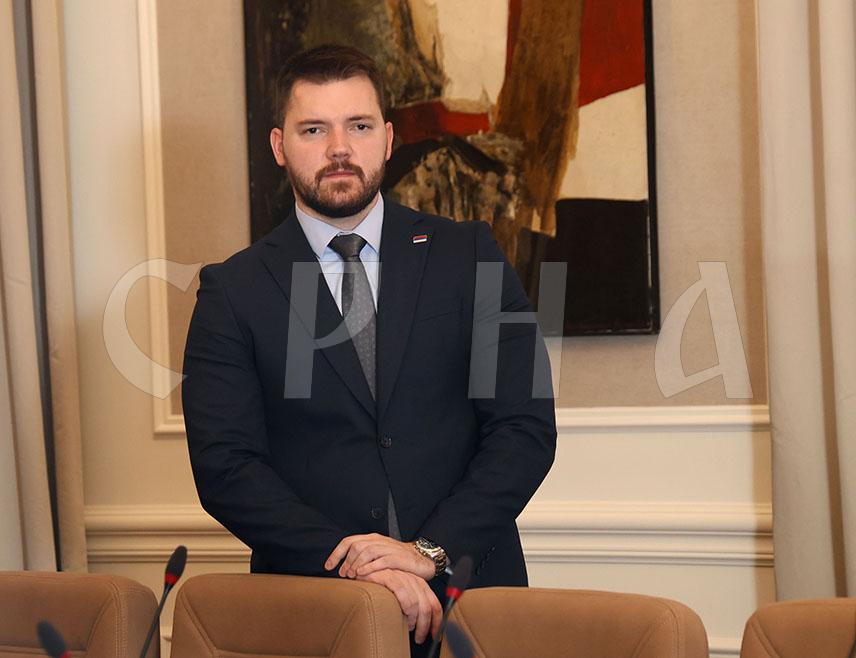
BANJA LUKA, JANUARY 20 /SRNA/ - International and economic policy expert Nemanja Plotan pointed out that today, great powers are not only building alternative institutions, but also their own monetary ecosystems.
"The global economy is gradually dividing into competing monetary zones, each with its own payment systems, digital currencies, and reserve instruments. In this way, the era of a unified financial order is coming to an end, and a period of monetary multipolarism is beginning," Plotan stated in a column for SRNA. SRNA publishes Nemanja Plotan's column in its entirety: "There are decades in which nothing happens, and there are weeks in which decades happen." This quote by Vladimir Lenin perfectly captures the speed and scale of global developments shaping world politics today. However, geopolitical events, combined with technological progress, have taken on entirely new dimensions, which is now especially reflected in the trajectory of the global economy. Digital currencies have become a burning topic following the rise of Bitcoin and blockchain technology, which in historical terms shook the global economy almost overnight. The uncontrolled proliferation of cryptocurrencies - many of which have been used for illegal activities - has prompted most central banks around the world to begin developing their own digital currencies. These global trends are now fundamentally reshaping the architecture of the global economy and the way geopolitical power is translated into the economic sphere. Today, economic sanctions no longer represent the dominant geo-economic instrument they once were during the first phase of American unipolar hegemony. Their massive and often arbitrary use has transformed them from instruments of international law into tools of political discipline, thereby eroding their legitimacy and effectiveness. Instead of changing state behavior, sanctions increasingly stimulate the development of parallel economic and financial structures that, over the long term, undermine the foundations of Western financial architecture. The evolution of sanctions policy has led to the emergence of so-called extraterritorial or indirect sanctions, implemented through the punishment of banks, companies, and individuals for doing business with sanctioned states. The most famous example is the case of BNP Paribas, which in 2014 was forced to pay as much as $8.9 billion in fines to the United States for processing financial transactions with countries under U.S. sanctions. The leadership of Republika Srpska was also subjected to this form of sanctions during the Biden administration, after refusing to implement decisions that would have undermined its political autonomy. At the center of contemporary geo-economic power is no longer classical trade policy, but control over digital financial infrastructure. Global payment systems have become the new frontline in the struggle for monetary dominance, and financial architecture is being transformed into an extension of the foreign policy of great powers. In this way, the monetary system is being explicitly militarized for the first time in history. It is precisely for this reason that great powers are no longer merely building alternative institutions, but are now constructing their own monetary ecosystems. Russia and China, through their SPFS and CIPS payment systems, are not seeking to reform the existing order, but to technologically bypass it. Their systems are not replacements for SWIFT — they are the foundations of a new financial reality in which the dollar is no longer the unquestioned axis of global trade. The world is no longer entering a phase of fragmentation — it is already in a state of deep systemic transformation. The global economy is gradually dividing into competing monetary zones, each with its own payment systems, digital currencies, and reserve instruments. In this way, the era of a unified financial order is coming to an end, and a period of monetary multipolarism is beginning. A 2023 survey by the Bank for International Settlements /BIS/ shows that as many as 94 percent of central banks worldwide are actively developing or testing their own central bank digital currencies /CBDCs/. In doing so, central banks are effectively building a new global financial infrastructure in which the US dollar could, for the first time since World War II, lose its position as the dominant global reserve currency. The global digitalization of money is no longer a technological experiment, but a geopolitical project. One of the most important pillars of this new financial architecture is the mBridge project — a cross-border payment platform led by the BIS Innovation Hub, China, the United Arab Emirates, Thailand, and Hong Kong, with Saudi Arabia joining in 2024. This project uses distributed ledger technology to enable instant cross-border payments and settlements, unlike traditional SWIFT transactions that rely on slow and costly correspondent banking networks. Russia is strongly promoting the use of central bank digital currencies in international payments in order to bypass Western sanctions, while mBridge opens space for states to trade in their own digital currencies without relying on the U.S. financial system. This is precisely where the core of the de-dollarization process lies. In parallel, in 2024 the Agorá project was launched — an initiative of the Bank for International Settlements in cooperation with seven central banks: the Bank of France /Eurosystem/, the Bank of Japan, the Bank of Korea, the Bank of Mexico, the Swiss National Bank, the Bank of England, and the Federal Reserve Bank of New York. The aim of the project is to develop tokenized central bank money and commercial bank deposits within a unified financial platform that would enable faster, cheaper, and more secure cross-border transactions. If successful, Agorá could further accelerate the transition toward a multipolar financial order and create yet another payment system independent of both the dollar and existing Western financial networks. The central geo-economic question is no longer whether global fragmentation will occur, but how that fragmentation will shape the geopolitical power of the great powers in the future.
English
8 hours ago

SELAK: MODERNIZATION OF PRISON SYSTEM A KEY PRIORITY
BANJA LUKA, APRIL 29, 2026 /SRNA/ – Modernization of the prison system is one of the key priorities of the Republika Srpska Ministry of Justice, Minis...
9 hours ago

KOJIĆ: WE OPPOSE PROPOSAL TO EXTEND JURISDICTION OF COURT OF BiH
SARAJEVO, APRIL 29, 2026 /SRNA/ – The SNSD club in the House of Representatives of the BiH Parliamentary Assembly will not support a proposal expandin...
10 hours ago
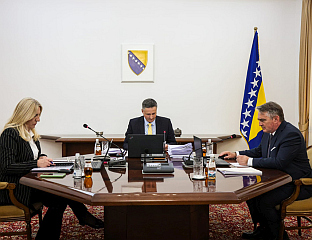
CVIJANOVIĆ’S INITIATIVE ON TERRORIST DESIGNATION OF "MUSLIM BROTHERHOOD" AND IRGC, REJECTED BY KOMŠIĆ AND BEĆIROVIĆ
ISTOČNO SARAJEVO, APRIL 29, 2026 /SRNA/ – Members of the Presidency of BiH Denis Bećirović and Željko Komšić today opposed the recommendation of Serb...
10 hours ago

YOUTH STARTUPS SHOWCASE IDEAS
ISTOČNO NOVO SARAJEVO, APRIL 29 /SRNA/ – Five young teams presented their business ideas today during the "Camp Up" startup program in Istočno Novo Sa...
12 hours ago
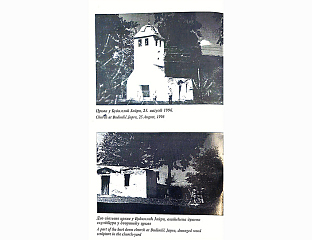
MEMBERS OF THE SO-CALLED BiH ARMY WERE DESTROYING ORTHODOX HOLY SITES
SARAJEVO, APRIL 29 /SRNA/ – The Committee protecting Serb People's rights in the FBiH disputed claims made in a statement by a group of Bosniak leader...
13 hours ago
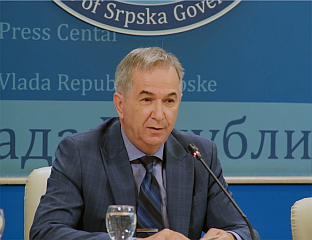
PUHOVAC: BILL EXPANDS ELIGIBILITY FOR TOURIST VOUCHERS
BANJA LUKA, APRIL 29 /SRNA/ – Republika Srpska Minister of Trade and Tourism Ned Puhovac says the Republika Srpska Government has defined today a Bill...