


 LATEST NEWS:
English
09.02.2026
 10:01:00
PLOTAN: RUSSIA WITHSTANDS RECORD SANCTIONS
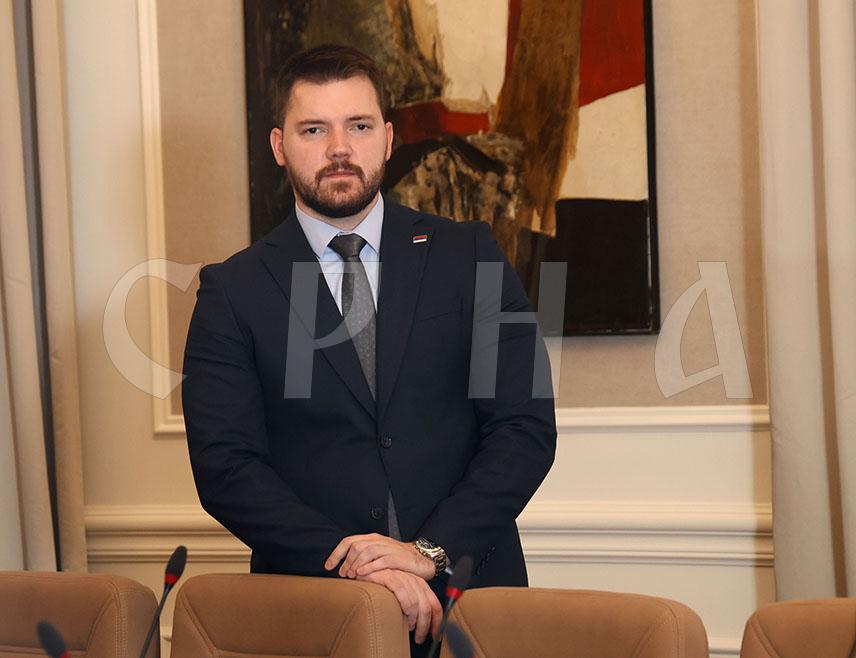
BANJA LUKA, FEBRUARY 9 /SRNA/ - Europe fears that if Russia is given room for unhindered development in the coming years, it could once again become the dominant power on the continent - economically, politically, and militarily, international and economic policy expert Nemanja Plotan stated in a column for SRNA.
SRNA publishes Plotan's column in its entirety: The Russian Federation has for many years remained the most sanctioned country in the world, with more than 26,000 international sanctions imposed on it. Although the economy grew by around 4.3 percent in 2024 due to military spending, growth slowed to 0.6 percent in 2025, while the IMF projects only 0.8 percent growth in 2026—signaling stagnation despite resilience to Western sanctions. In previous years, growth was driven by military-industrial spending and rising incomes, but from 2025 onward the economy has slowed due to restrictions on energy exports, lower oil prices, and high interest rates. During the 2022–2024 period, the Russian economy demonstrated surprising resilience. The key driver of growth was strong military-industrial spending, supported by rising real household incomes that stimulated domestic consumption. However, this is not a standard form of sustainable economic growth typical of healthy economies. Military-industrial spending and increased domestic consumption represent the two main drivers of the Russian economy and will continue to have this effect in the coming years, provided that revenues from oil and gas taxes remain roughly at current levels. What is currently happening in Russia can be described as military Keynesianism, which to some extent resembles the economic boom in the United States in the late 1930s, when increased military spending contributed to the exit from the Great Depression. As long as Russia has sufficient revenues from oil and gas sales, this model can generate economic growth. Do sanctions work in Russia's case? The short answer is: no. However, the real question is whether economic sanctions have ever truly achieved the objectives for which they are imposed. Sanctions are generally intended to damage the economy, reduce living standards, and trigger internal unrest that would lead to regime change. If we look at the experiences of other countries under Western sanctions, we see that none of them resulted in the overthrow of the ruling authorities. In this case, the goal was to place Russia in severe economic difficulty in order to force the Kremlin to reconsider its actions in Ukraine and ultimately halt them. However, this did not happen, and one of the key reasons lies in changes in the global economy. China has become a global superpower, while India is rapidly rising. As long as these countries are willing to continue trading with Russia, purchasing Russian energy and supplying it with key goods, the West's ability to seriously damage the Russian economy remains limited - except in the case of a naval blockade, which would constitute an act of war. It is also evident that Russia is outperforming the West in artillery ammunition production, while its budget has not run out of funds. Nevertheless, sanctions now have a more visible impact than before: they have forced Russia to sell oil at a discount, limited access to technology, and reduced budget revenues from energy exports. The budget deficit reached 2.6 percent of GDP in 2025 (the highest since 2020), while the current account surplus and trade surplus declined significantly compared to 2023/2024. Reserves remain strong (over $750 billion), public debt remains low, but pressure is increasing. Where is the Russian economy heading? If the current situation continues, Russia will face prolonged stagnation - the economy is becoming increasingly dependent on military spending, while opportunities for diversification and addressing demographic challenges remain limited. The most important pillar of the Russian economy will continue to be oil exports, and if prices remain high, economic growth will persist. Although Russia is currently not in a favorable position to diversify its economy or resolve long-standing demographic challenges that existed even before the war in Ukraine, it remains in a relatively stable position to regularly meet its obligations and finance budgetary needs. However, it would be in the economic interest of the Russian Federation for hostilities in Ukraine to end as soon as possible. Russia has recorded solid economic growth primarily due to the relative efficiency of its institutions in managing the economy, which suggests that there are no fundamental barriers preventing this type of growth from being transformed into long-term sustainable growth after the war in Ukraine ends. This would allow for the reallocation of resources from military to civilian spending, a recovery in investment, the attraction of technology and capital, and a return to a more sustainable growth model. The BRICS+ framework and trade in national currencies /around 85 percent of Russia's trade now takes place outside the dollar and the euro/ provide alternative pathways, but they cannot fully replace peace and normalization of relations with the rest of the world. On the other hand, precisely this scenario - a Russia that recovers and strengthens economically and militarily, without sanctions and constraints - provokes serious concern in European capitals. Europe fears that if Russia is given room for unhindered development in the coming years, it could once again become the dominant power on the continent - economically, politically, and militarily. This fear is, paradoxically, one of the main reasons why sanctions are maintained even though they have failed to achieve their original objective.
English
6 hours ago
KARAN: IN 1991, THE SERB PEOPLE CHOSE THE PATH OF FREEDOM, POLITICAL SELF-DETERMINATION AND INSTITUTIONAL ORGANIZATION
PALE, OCTOBER 24 /SRNA/ - Republika Srpska President Siniša Karan said that in 1991, the Serb people chose the path of freedom, political self-determi...
6 hours ago
DODIK: STABILITY OF REPUBLIKA SRPSKA WILL BE PRESERVED
PALE, OCTOBER 24 /SRNA/ - President Milorad Dodik said today in Pale that Republika Srpska is a permanent category and must remain so, adding that fai...
8 hours ago
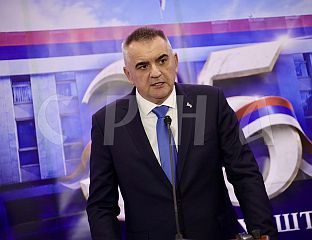
MINIĆ: NATIONAL ASSEMBLY PRESERVED SRPSKA’S SOVEREIGNTY AND ECONOMIC STRENGTH
PALE, OCTOBER 24 /SRNA/ - The National Assembly of Republika Srpska is a pillar of the preservation of Srpska as its legislative body and has made all...
8 hours ago
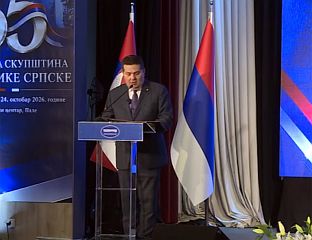
STEVANDIĆ: SRPSKA WAS ESTABLISHED AS JUSTICE FOR A PEOPLE THAT HAS ENDURED ALL GENOCIDES
PALE, OCTOBER 24 /SRNA/ - Republika Srpska was established as a form of historical justice for a people that endured all genocides under impossible hi...
9 hours ago
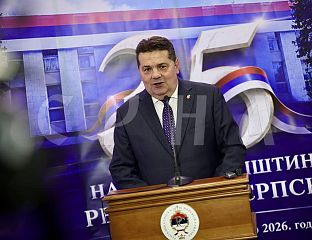
STEVANDIĆ: NATIONAL ASSEMBLY HAS DEMONSTRATED ITS INSTITUTIONAL AGENCY AND PERSEVERANCE
PALE, OCTOBER 24 /SRNA/ - Speaker of the National Assembly of Republika Srpska Nenad Stevandić said today in Pale that, over its 35 years, the Nationa...
9 hours ago
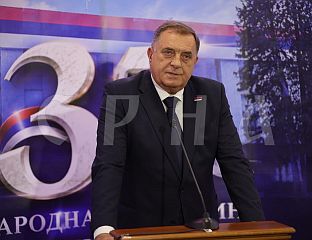
DODIK: NATIONAL ASSEMBLY HAS MADE KEY DECISIONS FOR SRPSKA
PALE, OCTOBER 24 /SRNA/ - President Milorad Dodik said today in Pale that, by passing laws and establishing institutions, the National Assembly of Rep...