



 LATEST NEWS:
English
20.05.2026
 09:45:00
DUŠAN THE MIGHTY’S CODE
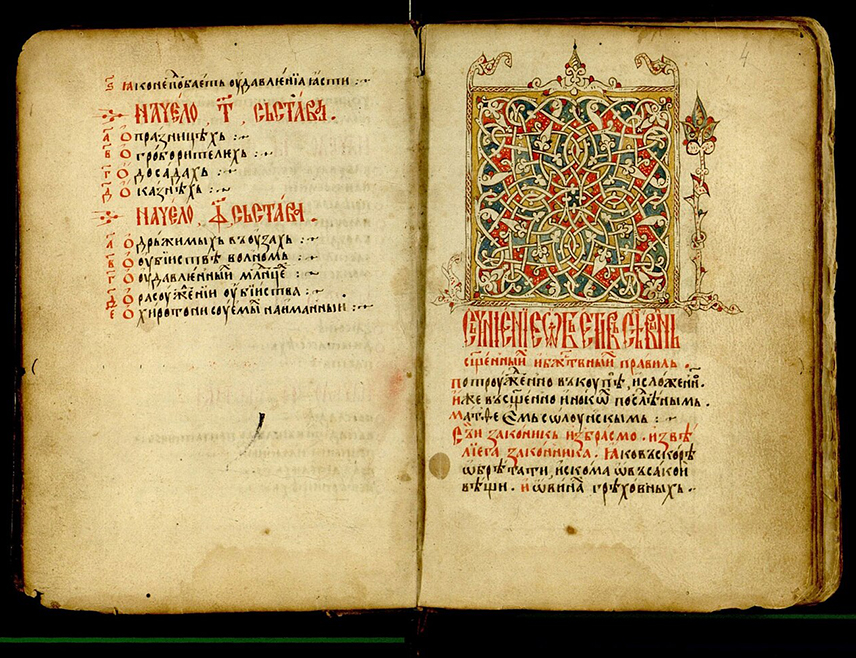
BIJELJINA, MAY 20 /SRNA/ – Dušan’s Code, the most important and strictest legal code of the Serb medieval state, which established the general principles of governance whose best-known motto is "An eye for an eye, a tooth for a tooth", was adopted on May 21, 1349.
Dušan the Mighty, the only representative of the holy-born Nemanjić dynasty not canonized as a saint and the first emperor, was the greatest ruler in Serbia’s history. During Dušan’s reign, the borders of Serbia encompassed territories that are now part of eight Balkan states. The penultimate ruler of the Nemanjić line strengthened his rule through strong legislation, the pinnacle of which was Dušan’s Code. Dušan began work on the Code in 1346, immediately after being crowned emperor, and to this day it is known that 24 copies exist. This most important law of medieval Serbia was adopted at an assembly of nobles and church dignitaries on May 21, 1349, in Skopje, and supplemented on August 31, 1354, in Serres. The amended edition of the Code contained 201 articles. It was based on the Nomocanon of Saint Sava /also known as Krmčija or Nomocanon/; in certain sections Dušan directly referred to this document. In addition, it partly relied on Byzantine law. The Code was adopted in order to regulate the Serbian state with provisions that would apply throughout the empire and to all its subjects. Although Dušan’s Code is remembered as very strict, historical records indicate that such measures contributed to a reduction in offenses and a decline in crime during the time of the Serbian Empire. The Code regulated some of the most common offenses - theft, adultery, violations of honour and reputation, in addition to constitutional provisions, it regulated class rights while also protecting the lower social classes. It contained criminal and procedural law provisions, as well as regulations concerning family and inheritance law. What was specific about this imperial act was the fact that, in addition to secular offenses, it also regulated spiritual matters. Among the first issues regulated by the Code were marital relations. Articles two and three state that no one may marry without the blessing of their spiritual advisor and that, if this occurred, "such persons shall be separated". Not only were marital relations regulated by law, but also sexual relations, and even "fornication between spouses" was punishable. “If a noblewoman commits fornication with her man, both shall have their hands cut off and their noses slit,” the Code states. Under Dušan’s Code, rapists and pedophiles were punished in the following way: "If a nobleman takes a noblewoman by force, both his hands shall be cut off and his nose slit; if a commoner takes a noblewoman by force, he shall be hanged; and if one forces a woman of his own class, both his hands shall be cut off and his nose slit." Lying, bribery, and slander were also considered serious offenses. Forgery of documents was punished by confiscation of what one tried to conceal. Accepting bribes resulted in confiscation of all property, while a slanderer was equated with a robber. Swearing and insults were punished with fines. Article 55 states that "if a nobleman or lesser noble insults a commoner, he shall pay 100 perpers, and if a commoner insults a nobleman or lesser noble, he shall pay 100 perpers and be branded". During the reign of Emperor Dušan, crimes committed under the influence of alcohol were punished by gouging out the eyes, beatings, or amputation of limbs. The principle “An eye for an eye, a tooth for a tooth” is best reflected in the punishments for the gravest crimes of murder. The punishment for murderers was death; however, if close relatives were killed, the punishment was harsher. "Whoever is found to have killed his father, mother, brother, or child, such a murderer shall be burned alive," the Code states. If someone killed a member of the clergy, they could also end up on the gallows. In memory of the adoption of Dušan’s Code, May 21 is marked as Serbia’s Judiciary Day.
English
3 hours ago

THACI DEFENSE DENIED REQUEST TO SUBMIT WITNESS STATEMENT AS WRITTEN EVIDENCE
THE HAGUE, OCTOBER 22 /SRNA/ – The Kosovo Specialist Chambers in The Hague have rejected a request by the defense of former Kosovo Liberation Army /KL...
4 hours ago
TRIFKOVIĆ'S BOOK ON TRAGIC FATE OF PEOPLE FROM MONTENEGRO PRESENTED
BANJA LUKA, OCTOBER 22 /SRNA/ – The book The Road of Suffering: A Chronicle of the Calvary of the People of Montenegro and Boka, 1944-1945, by Profess...
5 hours ago

FALSIFIED PARDON DOCUMENTS PUBLISHED IN CONNECTION WITH CANOPY COLLAPSE CASE
BELGRADE, OCTOBER 22 /SRNA/ – Aleksandar Vučić, head of the "United Serbia" electoral list, said falsified documents had been published claiming that...
5 hours ago

FERTILE AGRICULTURAL LAND MUST BE PROTECTED FROM SOLAR PROJECTS
BANJA LUKA, OCTOBER 22 /SRNA/ – President Milorad Dodik said it was unacceptable for fertile, arable land, one of the most important resources, to be...
6 hours ago

OPPOSITION ACCUSES GOVERNMENT OF VIOLENCE AS CLASHES ERUPT IN ALBANIAN PARLIAMENT
TIRANA, OCTOBER 22 /SRNA/ – Scuffles broke out in the Albanian parliament today, with documents and water thrown toward the speaker as the opposition...
6 hours ago

SERBS WERE THE BIGGEST VICTIMS OF GENOCIDE IN 20TH-CENTURY EUROPE
BELGRADE, OCTOBER 22 /SRNA/ – Serbs suffered the largest genocide of any European people in the 20th century, and genocide against Slavic peoples cont...