


 LATEST NEWS:
English
31.05.2026
 11:22:00
FROM DAYTON TO PROTECTORATE: WHO ACTUALLY GOVERNS BiH?
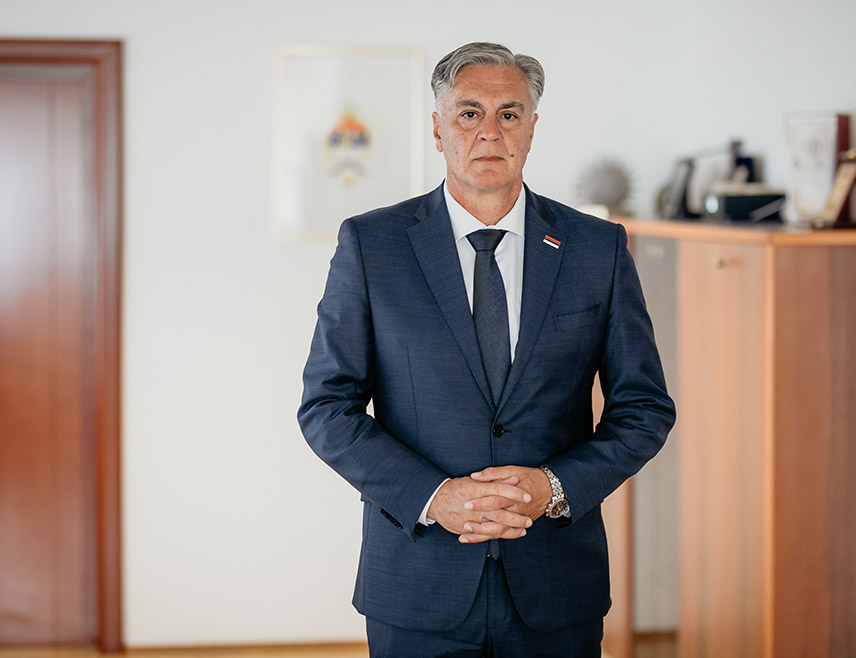
BANJA LUKA, MAY 31 /SRNA/ - Professor of Constitutional Law Siniša Karan pointed out to SRNA that the issue of the acts of High Representatives today is no longer just a legal issue, but has become a central political and constitutional question regarding the future of BiH.
In an author's text for the News Agency of Republika Srpska - SRNA, Karan emphasized that Republika Srpska continuously points out that BiH cannot build democratic capacity if key political processes are determined by unelected international representatives instead of domestic leaders. The author's text by Professor Karan for SRNA is transmitted in its entirety: Nearly three decades after the Dayton Agreement, BiH still functions between sovereignty and international oversight. At the center of this problem lie the decisions of High Representatives, which over the years have deeply altered the political and constitutional-legal structure of the country. Therefore, the issue of the acts of High Representatives today is no longer just a legal question. It has become a central political and constitutional question for the future of BiH, especially following the memorandum signed by Bosniak politicians in Sarajevo, which confirms that political Sarajevo still refuses to abandon policies based on interventionism, unitarization, and the presence of the international factor as the supreme arbiter in the internal relations of BiH. Interventionism as a Model of Governing BiH The institution of the High Representative was established as a mechanism to facilitate the civil implementation of peace. However, over the years, it has grown into a center of political power with broad and loosely defined authorities, devoid of real legal and democratic accountability. Acting as both a constituent and legislative authority, High Representatives have carried out revisions of the constitutional system, shifting the agreed balance toward the unitarization of BiH. Their interventions have encompassed nearly all areas of political and social life, from constitutional changes, the imposition of laws, and the formation of new institutions, to the removal of democratically elected officials and direct influence over the executive and judicial branches. The fundamental consequence of such actions has been the gradual displacement of political power from the constitutional frameworks provided by the Dayton Agreement. Because of this, for years BiH has functioned as a kind of political and legal experiment, in which international institutions assume the role of domestic government bodies. Republika Srpska Warns for Years: Interventionism Tearing Down Dayton Republika Srpska continuously points out that BiH cannot build democratic capacity if key political processes are determined by unelected international representatives instead of domestic leaders. Therefore, the issue of the decisions of High Representatives must be viewed as a matter of protecting the Dayton constitutional structure and preserving the constitutional position of the entities as defined by the international agreement. The core of the problem lies not only in individual decisions, but in a governance model that for years has created a political system based on imposition rather than internal agreement. Precisely because of this, Republika Srpska insists on returning BiH to the framework of the original Dayton solutions and closing the era of international interventionism, because no state can develop full sovereignty if its key political authority remains outside its constitutional and democratic system. BiH Between Sovereignty and Protectorate The Bonn Powers enabled the High Representative to become the most important legislator in BiH, shaping its state structure. By enacting new laws and amending existing ones, the High Representative significantly altered the constitutionally established principles of the division of competencies. BiH is a state whose political reality has functioned for years in the form of a semi-protectorate, with constant uncertainty about when such a governance model will finally end. The biggest problem is that a portion of the political structures in Sarajevo found exactly the political framework that suits them in this model. Instead of an internal agreement between the constituent peoples and entities, they have persistently insisted on international interventions and political pressure as a way to resolve internal disputes. Such a policy is not a policy of stabilization. It is a policy of maintaining BiH's permanent dependence on an external factor. Opening the Question of the Legal Destiny of the Acts of High Representatives The acts of the High Representative have been incorporated into the legal order of BiH, raising the question of the relationship between these acts and the Constitution of BiH after the departure of the High Representative from BiH. The Constitutional Court of BiH, as the body that decides on the compliance of general acts with the Constitution, did not hold a unified stance when assessing the constitutionality of some of the laws enacted by the High Representative; more precisely, the opinions of the judges were conflicting, diverse, politically determined, and completely inconsistent in their own practice. Thus, the issue of the decisions of High Representatives gains significance, especially keeping in mind that a large number of imposed decisions were never adopted by domestic institutions in a regular democratic procedure. The question opens as to what will happen to these acts at the moment of the eventual closure of the OHR and the termination of Annex 10 of the Dayton Agreement. A possible legal review of the imposed decisions does not represent an attack on BiH, but rather a legitimate constitutional-legal question. Especially when taking into account that many competencies were transferred outside of clearly defined constitutional procedures. It is the constitutional right of the entities, and not the High Representative, to declare their position in the proceedings regarding the need to form new bodies and the enactment and content of corresponding acts. This would represent a guarantee of their functioning and implementation, eliminate the need for the existence of a High Representative, and contribute to general constitutional-legal and political stabilization. That is precisely why it is necessary to compile a serious and critical review of all decisions made by High Representatives, including those imposed by the self-proclaimed High Representative Christian Schmidt, with a special emphasis on those through which competencies were transferred from the entities to BiH. Such an analysis would show the legal, political, and institutional consequences of imposing decisions, as well as the inappropriate constitutional and legal transfer of competencies, but it would also raise the question of their sustainability within the constitutional-legal order of BiH. A particularly sensitive issue is that of individual acts of High Representatives which ordered specific measures and political decisions. A portion of these acts was never published in official gazettes, which opens a serious question regarding their legal nature and the possibility of them being treated as part of the domestic legal system. This additionally makes the issue of their legal sustainability and the possibility of their further survival in legal transactions disputable, especially bearing in mind that an effective legal remedy was never provided in the legal system of BiH for individual decisions of the High Representative. This is a question that directly encroaches upon the basic standards of the rule of law and legal certainty. An additional constitutional-legal dimension to this issue is provided by the position of the European Convention on Human Rights and Fundamental Freedoms within the constitutional system of BiH. The Constitution of BiH provides for the supremacy of the European Convention over domestic legislation and obligates all institutions in BiH and the entities to ensure the protection of the rights and freedoms guaranteed by the Constitution, the European Convention, and international documents that form part of the constitutional matter of BiH. Precisely because of this, it is no longer possible to view the issue of the acts of High Representatives exclusively as a political question, but rather as a serious constitutional-legal issue that will become increasingly relevant in the coming period, especially in the context of demands for the closure of the OHR and the return of full political sovereignty to domestic institutions. Political Sarajevo Still Believes in a BiH Without an Agreement of Peoples and Entities The memorandum signed by Bosniak political parties in Sarajevo has a much broader meaning than daily politics. It shows that a part of political Sarajevo still insists on a model of BiH based on unitarization, interventionism, and the political tutelage of the international community. Instead of closing the protectorate chapter, the memorandum seeks the maintenance of a political system managed by the High Representative through the "Bonn Powers," even though it is precisely this policy that has produced constant political conflicts, institutional blockades, and deep distrust among the peoples of BiH over the past thirty years. BiH cannot simultaneously build democratic sovereignty and remain permanently dependent on mechanisms of international governance. Therefore, the memorandum of Bosniak politicians signed in Sarajevo is a confirmation that a part of the political elite still believes that BiH can survive only as an internationally supervised political project, and that they are not ready to abandon policies that have kept BiH, its equal entities, and its constituent peoples in a thirty-year crisis.
English
1 hour from now
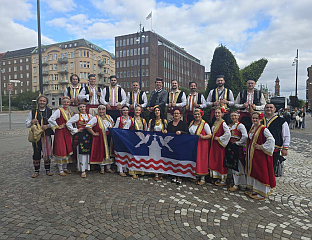
"SRBADIJA" WINS GOLD AT THE CHOIR OLYMPICS IN SWEDEN
BIJELJINA, AUGUST 10 /SRNA/ - The mixed choir "Srbadija" from Bijeljina has won a gold medal in the folklore and traditional music category at the Cho...
2 minutes from now
A LIST OF OVER 20 INTERNATIONAL INVESTORS IN SRPSKA'S BONDS AVAILABLE ON THE "BLOOMBERG" PLATFORM
BANJA LUKA, AUGUST 10 /SRNA/ - Investors in Republika Srpska bonds issued on the London Stock Exchange are renowned global investors who actively inve...
1 hour ago
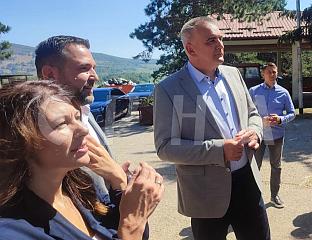
MINIĆ: BAM 200,000 FOR CHEESE DAIRY AT BANJA LUKA CENTRE FOR AGRICULTURAL AND RURAL DEVELOPMENT
BANJA LUKA, AUGUST 10 /SRNA/ – Republika Srpska Prime Minister Savo Minić said that the Government would provide BAM 200,000 for the purchase of equip...
1 hour ago
GOLUBOVIĆ: FREE TEXTBOOKS - SIGNIFICANT RELIEF FOR HOUSEHOLD BUDGETS
BANJA LUKA, AUGUST 10 /SRNA/ – Free textbooks are significant support and considerable financial relief for household budgets, with savings for famili...
1 hour ago
KUZMIĆ: PURCHASE OF NEW TRACTORS WILL ALSO HELP YOUNG PEOPLE REMAIN IN RURAL AREAS
BANJA LUKA, AUGUST 10 /SRNA/ – Republika Srpska Minister of Agriculture, Forestry and Water Management Anđelka Kuzmić said that the Srpska Government...
1 hour ago
IMPROVED CREDIT RATING OUTLOOK FOR SRPSKA
BANJA LUKA, AUGUST 10 /SRNA/ - The international rating agency "Standard & Poor's," in its latest report following its regular annual assessment, has...