


 LATEST NEWS:
English
15.09.2026
 09:49:00
CONSTRUCTION OF CHURCH OF SAINT SAVA IN VRAČAR BEGAN 91 YEARS AGO
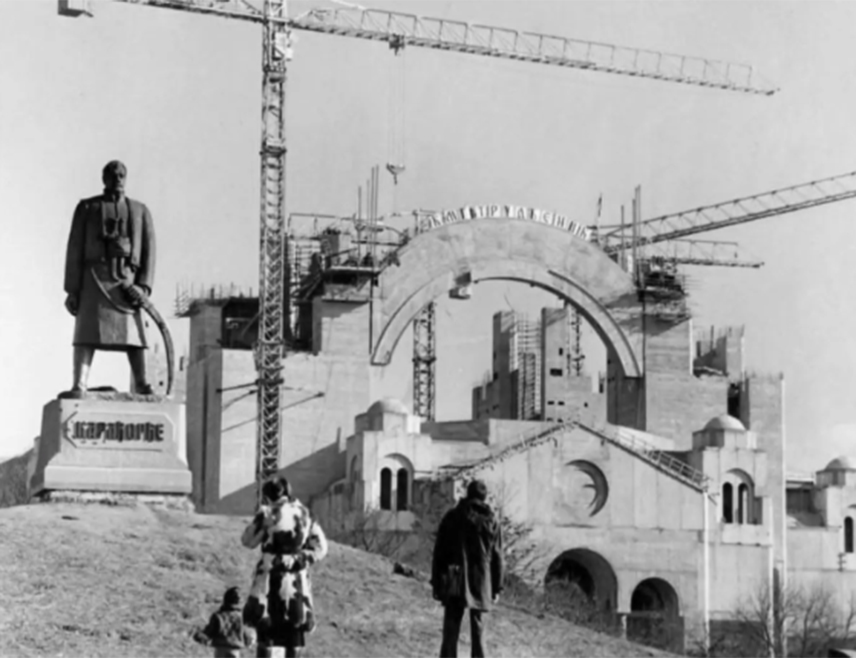
BIJELJINA, SEPTEMBER 15 /SRNA/ - Construction of the Church of Saint Sava in Belgrade’s Vračar neighbourhood began on this day in 1935, but its construction was interrupted by wars and other historical events; however, Serbs never gave up until the project was completed in 2020, bringing about a spiritual renewal among the people.
The construction of this magnificent edifice was a dream of many generations of Serbs, not only in Serbia. Republika Srpska also took part in bringing the project to completion. The Church of Saint Sava is considered a votive church of the Serb people. Its construction took a very long time, and it was supported by many people through donations, contributions, and bequests, as well as government funding. Interestingly, construction of the church began on September 15, the date that in recent years has been celebrated as Serb Unity, National Flag and Freedom Day. “If the Church of Saint Sava represents a culmination of all that the Serb spirit has achieved in the fields of spirituality, culture and statehood, the history of its construction illustrates the historical path that the Serb people have followed in modern history,” the church’s website says. The idea of building the church dates back to the late 19th century and is linked to 1895, when 100 of the most prominent citizens of Belgrade at the time, led by Metropolitan Mihailo, founded the Society for the Construction of the Church of Saint Sava, 300 years after the Ottoman Turks burned the relics of the Serb saint on Vračar. The first competition for the design of the church, held in 1905, was unsuccessful, while the circumstances of the wars at the beginning of the 20th century further delayed the start of construction. In the new state, the idea was revived, as was the Society for the Construction of the Church, and design competitions began to be held in the 1920s. The task of designing the church was entrusted to architects Bogdan Nestorović and Aleksandar Deroko in 1930, and construction began on September 15, 1935, during the tenure of Patriarch Varnava. On May 10, 1939, Serbian Patriarch Gavrilo laid a charter in the foundations bearing an inscription stating that this magnificent church was being built as “a visible and everlasting monument to the profound gratitude of all our people to their first archbishop, teacher, enlightener and spiritual renewer, the great servant of God, equal-to-the-apostles and enlightener of the Slavs, Saint Sava.” “For the good of our holy Orthodox Church, for the happiness and prosperity of our exalted royal house and our entire people. Amen,” the charter says, among other things. WORLD WAR II HALTED CONSTRUCTION, PERMISSION TO RESUME GRANTED ONLY IN 1984 The war and the new social order established in Yugoslavia after 1945 halted construction of the church for a long period, but the idea was not abandoned even during that time. After becoming head of the Serbian Orthodox Church /SPC/ in 1958, Patriarch German revived the idea of resuming construction of the church. Permission to continue the work was finally granted in 1984, after 88 repeated requests and an equal number of refusals. In September of the same year, Patriarch German appointed architect and professor Branko Pešić as chief architect to resume the project and oversee the construction of the church. Professor Pešić revised the original design to make better use of new materials and construction techniques. CONSTRUCTION RESUMED IN 1985 His Holiness Patriarch German reconsecrated the church on April 30, 1985, in the presence of all Serbian bishops, and laid a charter marking the resumption of construction under the new historical circumstances. On May 12, 1985, the Patriarch, together with 20 bishops and numerous clergy, celebrated the Hierarchical Divine Liturgy, attended by 12,000 worshippers inside the church walls, while another 80,000 people gathered in the churchyard. . The resumption of the church’s construction marked a historic turning point, as well as a spiritual revival of the Orthodox Serb people. Construction of the church resumed on August 12, 1985. The walls were raised to their full height of 40 metres. The document approving the resumption of construction was signed by then-President of the Presidency of Serbia Dušan Čkrebić, who in 2007 was awarded the Order of Saint Sava by the Serbian Orthodox Church in recognition of his contribution. A major achievement was the installation of the central dome, weighing 4,000 tonnes. It was constructed on the ground and then, together with its copper sheet covering and a large gilded cross standing 12 metres tall and weighing four tonnes, was lifted and placed on the walls. The lifting operation, which lasted 40 days, was completed on June 26, 1989. Another difficult period in the history of the church began in the 1990s with the breakup of Yugoslavia and the wars in the territories of its former republics, followed by NATO’s aggression against Serbia in 1999. From the beginning of 1991, the pace of construction slowed significantly, and by 1996, work had come to a complete halt. SOCIETY REVIVED IN 2001 The Society for the Construction of the Church of Saint Sava on Vračar was revived in 2001. It was chaired by His Holiness Patriarch Pavle, while then-Serbian Prime Minister Zoran Đinđić was elected president of the Executive Board. Work on the exterior of the church was completed in 2004, marking the end of the first phase of construction and the beginning of work on the interior. The vaults in the nave and underground level were completed in 2006. The Church of Saint Prince Lazar, with the Patriarchs’ Crypt, was established between 2001 and 2002 and frescoed between 2012 and 2016. The Crypt, located beneath the church’s altar, is the burial place of Serbian patriarchs. Patriarch Irinej was buried in the Crypt on November 22, 2020, becoming the first of Saint Sava’s successors whose earthly remains rest there. The interior decoration of the church, namely the frescoing of the central section, was carried out, in accordance with the original concept, using the mosaic technique. The project was undertaken by the Russian Academy of Arts, with Academician Nikolai Mukhin heading the project. More than 300 master craftsmen and artists worked in workshops in Russia and on site, completing this grandiose project, covering more than 15,000 square metres with mosaics, in record time — from 2016 to 2020. The interior was virtually completed in 2020: the iconostasis, polyeleos, stone flooring and stonework elements were installed in the central nave, narthex and paraclia, making the space essentially ready for liturgical use. The church was opened to visitors on October 27, 2020, when its interior was essentially completed. Today, Belgrade is adorned by this magnificent church dedicated to the glory of Saint Sava and the Nemanjić dynasty. At the same time, the church stands as a testament to the perseverance of the Serb people in realizing, despite all the difficulties, the idea of building it, an idea passed down from generation to generation. Each generation contributed as much as it knew and was able to so that the church could be built. It can therefore be said that this is truly a people’s church: in building it, the Serb people rebuilt themselves and reaffirmed the strength of unity and Orthodoxy.
English
1 hour from now
PATRUSHEV: IF POLAND ATTACKS RUSSIA, IT WILL CEASE TO EXIST
MOSCOW, SEPTEMBER 15 /SRNA/ – Poland could cease to exist as a state within a few days if it attacks Russia, Russian presidential aide Nikolai Patrush...
48 minutes from now
UNITY OF SERBS DAY MARKED IN MOSTAR
MOSTAR, SEPTEMBER 15 /SRNA/ – The Day of the Unity of Serbs, Freedom and the National Flag has been marked today at the Consulate General of Serbia in...
7 minutes from now
WORK UNDERWAY TO IDENTIFY PERSON WHO THREATENED KOJIĆ AND DODIK
BANJA LUKA, SEPTEMBER 12 /SRNA/ - The Ministry of Interior /MoI/ of Republika Srpska is acting on a report filed by SNSD lawmaker in the House of Repr...
6 minutes ago
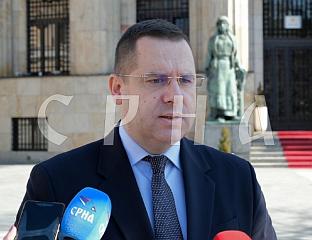
KOVAČEVIĆ: 13TH PENSION PROMISE SOUNDS GOOD, BUT IN REALITY MEANS LESS THAN AMOUNT BY WHICH REPUBLIKA SRPSKA GOVERNMENT INCREASES PENSIONS ANNUALLY
BANJA LUKA, SEPTEMBER 15 /SRNA/ – A 13th pension sounds good, but in reality it is significantly less than the amount by which the Republika Srpska Go...
13 minutes ago
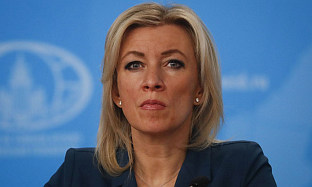
ZAKHAROVA: DISMANTLING DAYTON BiH WOULD CALL ITS FUTURE INTO QUESTION
BELGRADE, SEPTEMBER 15 /SRNA/ - The Russian Federation clearly and unequivocally condemns calls by certain political actors in BiH to reconsider the D...
17 minutes ago
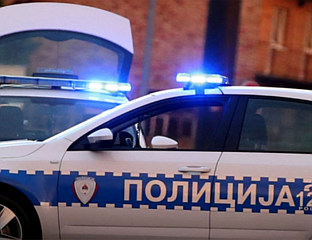
THREATS SENT TO DODIK AND KOJIĆ, ALL REPORTED TO SRPSKA MoI
SARAJEVO, SEPTEMBER 15 /SRNA/ – Milorad Kojić, a member of the SNSD caucus in the House of Representatives of the BiH Parliamentary Assembly, reported...