



 LATEST NEWS:
English
24.11.2026
 10:45:00
SERBS REJECT SO-CALLED STATEHOOD DAY AND EFFORTS TO CREATE CIVIC BiH
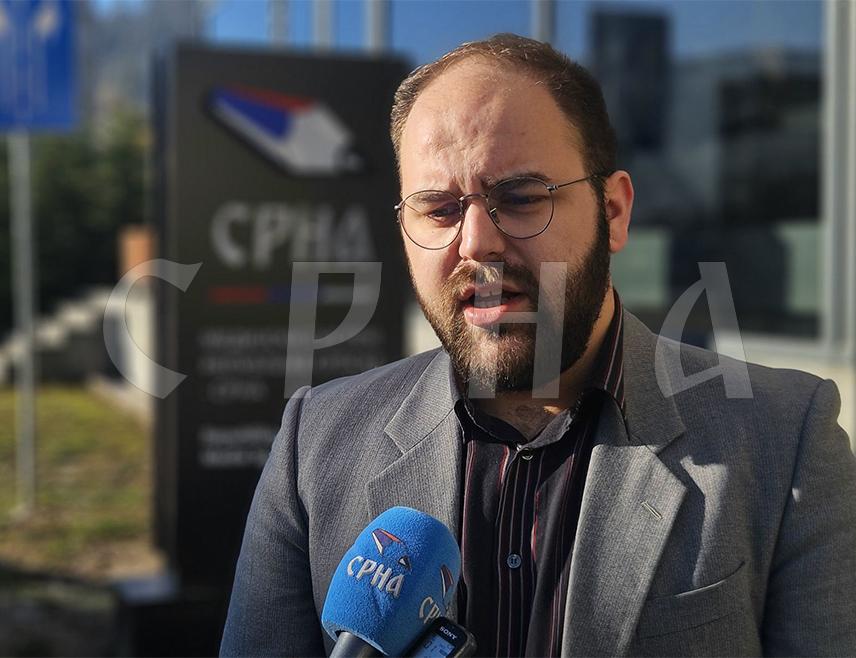
PALE, NOVEMBER 24 /SRNA/ - Marking November 25, the date of the first session of the State Anti-Fascist Council for the National Liberation of BiH /ZAVNOBiH/ in 1943, as the so-called Statehood Day is linked to the concept of a civic BiH in which Bosniaks would dominate, something Republika Srpska's institutions will never accept, historian Georgije Vulić told SRNA.
Vulić said that Republika Srpska could not and would not influence what was marked in Sarajevo. "Political Sarajevo is free to mark what it wants in the Bosniak part of BiH, but the historical facts should certainly be pointed out. That date, November 25, cannot be called any kind of BiH Statehood Day. BiH as such, in its present form, did not gain its statehood on November 25, 1943, in Mrkonjić Grad, and that should be kept in mind," Vulić said. He said that Serbs, especially those from what is now BiH, had played the most important role in the anti-fascist struggle during World War II. Vulić reminded that the Serbian people had two anti-fascist resistance movements during World War II, while a considerable part of the population then called Muslim, and now Bosniak, did not take part in the anti-fascist struggle on the territory of today's BiH, and many of them sided with the occupiers. "ZAVNOBiH, that is, this event, has been torn out of its real historical context in the media narratives coming from Sarajevo. ZAVNOBiH certainly cannot be separated from the Anti-Fascist Council for the National Liberation of Yugoslavia /AVNOJ/, which as an event marked the creation of Yugoslavia as such, although it should be stressed that these were the revolutionary methods of the time," Vulić said. He explained that a group of people who had not been elected in any parliamentary elections decided the fate of a people, which the great powers later accepted, and that was how the new socialist Yugoslavia was formed. "But ZAVNOBiH certainly is not, and should not be, seen as some kind of BiH Statehood Day, either in historiography or in political narratives, because the entity formed at ZAVNOBiH was one of the future Yugoslav republics," Vulić said. He added that it was not appropriate to separate that Yugoslav republic from the events of the 1990s. "In 1991, at the height of the Yugoslav crisis, the Serb people sided with the forces that sought to preserve Yugoslavia, which cannot be said for the other side," Vulić stressed. He said that marking ZAVNOBiH as the so-called BiH Statehood Day in fact had an entirely political overtone and was tied to the concept of a civic BiH, which by its very nature would lead to Bosniak domination. That, he said, has been the core aim of the Bosniak intellectual and political elite for the past 30 years or so. Officials and analysts in Republika Srpska are united in their view that November 25 is not a common holiday at the BiH level, but a date marked only in part of the Federation of BiH as the so-called Statehood Day. For years they have pointed out that there is no state-level law on holidays declaring November 25 "Statehood Day," and that it is a unilateral imposition and observance of the former ZAVNOBiH Day in cantons with a Bosniak majority. Today's BiH draws its legal continuity as a state and its constitutional order from the Dayton Peace Accords, initialed on November 21, 1995, at the Wright-Patterson US Air Force Base, not from decisions taken in 1943. Republika Srpska marks the anniversary of the agreement as a public holiday. Representatives of Republika Srpska's institutions believe that the invocation of ZAVNOBiH in Sarajevo is politically motivated and does not reflect the real historical context. They say that the legacy of anti-fascism is interpreted selectively in the FBiH, while always stressing that Srpska does not impose its holidays on the FBiH or extend them there. Meanwhile, political representatives and institutions in the FBiH mark November 25 as the so-called BiH Statehood Day, citing the first session of ZAVNOBiH in Mrkonjić Grad in 1943 as the key historical moment when statehood was restored and the equality of Serbs, Croats and Bosniaks was confirmed.
English
22 hours ago
METROPOLITAN FOTIJE: METROPOLITAN IRINEJ OF BAČKA GREAT THEOLOGIAN
BIJELJINA, NOVEMBER 24 /SRNA/ – His Eminence Metropolitan Fotije of Zvornik-Tuzla has today officiated at a memorial service in Bijeljina following t...
23 hours ago
NASER ORIĆ BROUGHT IN FOR QUESTIONING AT POLICE STATION
ISTOČNO NOVO SARAJEVO, NOVEMBER 24 /SRNA/ – Naser Orić, a member of an organised criminal group who was arrested as part of Operation Emisar, has been...
23 hours ago
KOVAČEVIĆ: IGOR DODIK WILL SILENCE THOSE WHO CRITICISE HIM SOLELY BECAUSE OF HIS SURNAME WITH RESULTS
BANJA LUKA, NOVEMBER 24 /SRNA/ – The Republika Srpska Government`s work performance results, headed by Igor Dodik, will be such that he will undoubted...
23 hours ago
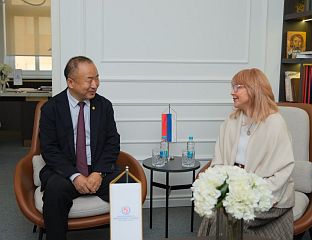
IMPORTANT TWO-WAY COOPERATION BETWEEN SRPSKA AND CHINA
BANJA LUKA, NOVEMBER 24 /SRNA/ – Director of the Republika Srpska International Cooperation Office, Ana Trišić-Babić, says it is important for Srpska...
1 day ago
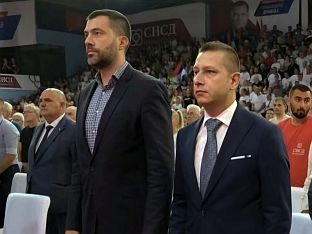
GOGANOVIĆ: IGOR DODIK HAS INTERNATIONAL CONTACTS AND POLITICAL AUTHORITY MANY IN SARAJEVO LACK
ISTOČNO SARAJEVO, NOVEMBER 24 /SRNA/ - Deputy Defense Minister in the Council of Ministers Aleksandar Goganović told SRNA that Republika Srpska was on...
1 day ago
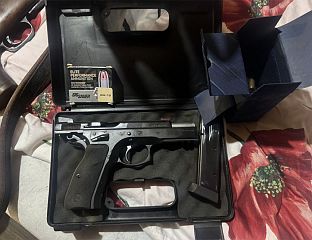
FIVE ARRESTED, WEAPONS AND MONEY SEIZED
BANJA LUKA, NOVEMBER 24 /SRNA/ - Five people have been arrested in Republika Srpska and the Federation of BiH in Operation EMISAR, and weapons and cas...