


 LATEST NEWS:
English
04.10.2023
 10:14:00
"10,000 HRK FOR 100 PIECES OF BURIED CHILDREN"
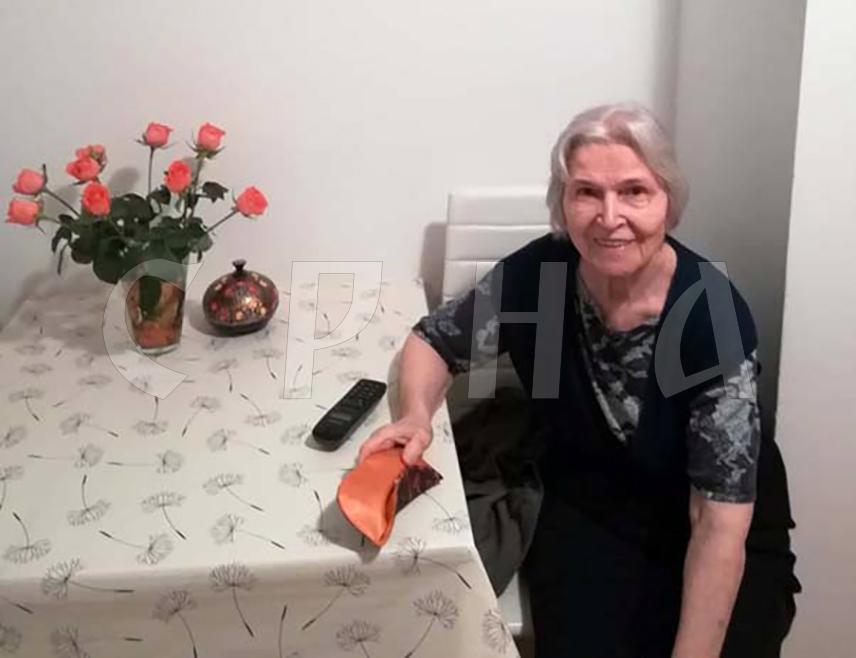
The notebook belonging to gravedigger Ilovar, who was burying dead children for days on the order of the nuns, is one of the most shocking documents about the deaths of children in the Jastrebarsko prison camp, where a total of 3,336 children were detained. By: Tanja DERIKUĆA
KOZARSKA DUBICA, OCTOBER 4 /SRNA/ - The Ustasha camp for Serb children in Jastrebarsko was established on July 11, 1942. According to the testimony of Zora Milinić, who was deported there at the age of six, children were dying there of cold and hunger. In the early summer of 1942, Milinić was six years old and had a happy childhood that was interrupted when the Ustashas deported her and her sister Mara to the Jasenovac prison camp, where she stayed together with the children of Potkozarje for about two months. "We all got our number on a piece of paper around our necks. I ate my number out of hunger," said Milinić in her testimony to the Donja Gradina Memorial Zone public institution. Milinić stated they afterwards gathered older, stronger and healthier children and forced them into train carriages and took them to Croatia to the Jastrebarsko children's prison camp. "There were a lot of children there, similar to us, scared, naked, barefoot and hungry... They immediately separated the male children, put uniforms and caps marked with the letter `U` and took them away. We never saw them again," Milinić said. She was deported from Jasenovac together with her sister Mara and other children on a train that took them to nearby Croatian villages and lined them up in the middle of the village road, where the villagers were coming to take them their homes. According to her, sister Mara then left with the woman who separated her from the group, while she did not want to go because she was convinced that their father Radovan, killed in Jasenovac in 1942, would come to take them away. She found her sister in the village again. In the autumn of 1942, the Ustasha picked up the children of Podkozarje refuge and took them to the Jastrebarsko prison camp, where she was again separated from her sister Mara. "There I saw boys dressed in Ustasha uniforms. Those boys were in Jastrebarsko prison camp for a short time and I didn't see them again. I remember that older boys were transported by train, I saw them in the carriages. In the camp, nuns looked after us," said Milinić. The children in Jastrebarsko prison camp were forced to work, cleaning the yard, leaves and picking stones, and those who could not work, according to Milinić's memory, were beaten on the hands with a rod and it went on for days, while the children were dying of cold and hunger. "Still hungry and cold. Every morning they made us go outside to carry stones from pile to pile. One girl didn't have the strength to lift a stone, so it fell on her leg and made a bleeding wound. I helped her to pick up a stone to avoid nun’s beating. When the nun saw that, she hit me - even today I have a scar from the blow on the thumb of my left hand. And so, mistreatments on daily basis..." Milinić remembered. During her stay in the prison camp, Milinić got sick from hunger, fever and fatigue, but she received medical help and barely survived. The Jastrebarsko children's prison camp was liberated by the partisans. "One night we hear noise and heavy shooting. The door opens and the liberators - partisans - burst in among us, pick us up and immediately took us through the woods to our places, which were not yet liberated, but we were happy because we were with our people, who would from then until liberation, take care of us, who lost everything and were left alone," Zora Milinić stated in her testimony on the Jastrebarsko prison camp. After staying in residences and homes for orphans, Milinić arrived in Banjaluka to the Danko Mitrov home for war orphans, where she completed primary and secondary medical school. Many members of her family were killed in Jasenovac and in the National Liberation Struggle. The testimony about the suffering of her family in the Second World War, which Milinić, with her current residence in Koper, Slovenia, gave to the Public Institution "Donja Gradina Memorial Zone" in September 2022, ended with the following words: "I always remember all this, wishing no war to anywhere and anyone". Zora Milinić was born on July 8, 1935 in the Lajić family, to father Radovan and mother Radosava /née Knežević/, in the village of Sjeverovci in what was then Bosanska Dubica, which is located at the foot of Kozara mountain itself. GRAVEDIGGER ILOVAR’S NOTEBOOK, THE MOST DISTURBING DOCUMENT ON DEATH OF CHILDREN The Ustaše camp for Serb children in Jastrebarski was founded on July 11, 1942. It was founded by the Ministry of Association of the Independent State of Croatia with the aim of gathering children from other camps in the NDH in order to bring them up in the Ustasha spirit. The first transport of children arrived in mid-July 1942. The name of this camp was "Shelter for Refugee Children". However, a much more terrible truth was behind this, which according to the words of the museum adviser and director of the Donja Gradina Memorial Zone Area Public Institution Tanja Tuleković - is evidenced by the gravedigger Franjo Ilovar's notebook. Tuleković states that the notebook belonging to gravedigger Ilovar, who, on the order of the nuns, was burying dead children for days, is one of the most shocking documents about the death of children in the Jastrebarsko prison camp. "The children's bodies were packed in coffins and chests. In order to fit as many of them as possible in one coffin, the lids were closed by force. There could be eight to 10 children in one coffin", reads the notebook of gravedigger Ilovar, which is kept in the Museum in Mrakovica. Tuleković says that the caretaker of the cemetery counted the buried children by "kuna" and "pieces", and that nun Gaudencija certified the accounts with her signature. On the first page of the diary, it is written that 107 children were buried on July 22, 1942, evidenced by an invoice and confirmation: "HRK 10,000 received on an account of grave digging for 100 pieces of children buried." Jastrebarsko was a camp for children in the Independent State of Croatia's prison camp system and was located in Jastrebarsko, about 37 kilometers southwest of Zagreb. It existed from July 12 to October 1942, and the camp was managed by members of the Catholic Order of the Merciful Sisters of St. Vincent of Paul, while security was provided by members of the Ustasha Defense Service. Serb children caught, captured and abducted in various parts of the NDH during massacres or counter-insurgency operations carried out by the Ustasha regime, its Axis allies and other collaborators were interned in the camp. Children from other camps arrived in Jastrebarsko in an exhausted and weak condition. Total of 3,336 children were admitted to the prison camp.
English
7 hours ago
SRPSKA STRENGTHENING ITS GEOPOLITICAL POSITION BY TIES WITH U.S., RUSSIA AND CHINA
TREBINJE, JUNE 9 /SRNA/ – Republika Srpska's geopolitical position is undoubtedly favorable today, as it maintains good relations with the new US admi...
7 hours ago
GREIF: TRUTH ABOUT JASENOVAC MUST BE PASSED ON EVERY DAY
PALE, JUNE 9 /SRNA/ - World-renowned Israeli historian and Holocaust expert Gideon Greif has stated today in Pale that he has spent the past 14 years...
9 hours ago
DODIK: REMEMBRANCE OF ČEMERNO IS A DUTY SO THE TRAGEDY OF 1992 IS NEVER REPEATED
BANJA LUKA, JUNE 9 /SRNA/ – President Milorad Dodik stated that there is scarcely a place in Republika Srpska and the Federation of BiH that has not b...
10 hours ago

STEVANOVIĆ: IT IS IMPORTANT THAT SRPSKA OPENS UP TO REGION AND EUROPE
BANJA LUKA, JUNE 9 /SRNA/ - The Minister of Transport and Communications of Republika Srpska Zoran Stevanović stated that it is very important to enco...
10 hours ago
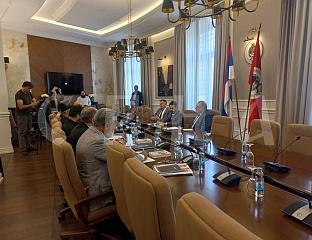
ROMIĆ: INAUGURAL HILANDAR DAYS CELEBRATION IN REPUBLIKA SRPSKA THIS YEAR
BANJA LUKA, JUNE 9 /SRNA/ – Marko Romić, Chairperson of the Republika Srpska Government Commission for Hilandar Monastery, announced that the inaugura...
13 hours ago
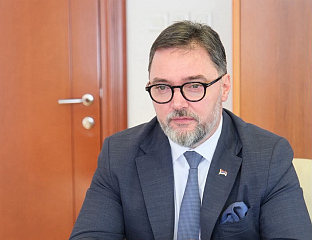
OHR FALSIFIES DAYTON, ATTRIBUTES TO ITSELF STATUS OF "AD HOC INTERNATIONAL INSTITUTION"
SARAJEVO, JUNE 9 /SRNA/ - Deputy Chair of the Council of Ministers Staša Košarac stated that what can be read today on the official website of the OHR...