



 LATEST NEWS:
English
10.06.2024
 13:32:00
GRUJIČIĆ: CANCER MORTALITY HAS DRAMATICALLY INCREASED SINCE NATO AGGRESSION

BELGRADE, JUNE 10 /SRNA/ - Doctor Danica Grujičić, former Minister of Health of Serbia, said today in Belgrade that the state has never invested more in medicines and equipment to combat cancer, but that cancer mortality, which dramatically increased after the NATO aggression, is not decreasing yet, with Serbia being the first in Europe in terms of cancer mortality.
At today's press conference at the Media Center, where the Declaration on the need for measures to remediate the consequences of the 1999 NATO aggression against the FR Yugoslavia was presented, Grujičić pointed out that statistical analysis of the number of cancer cases from 1999 to 2018 showed a significant increase in new cancer patients every year. "In absolute numbers, this ranges from 19,000 cases in 1999 to around 30,000 in 2018 and 40,000 in 2021," Grujičić emphasized. She noted that these are official data from the cancer registry, which exists because doctors and administrators are required to report every illness, meaning it is not automatic recording of all "C" diagnoses in Serbia. "When you look at the analysis of cancer mortality and incidence in Europe, Serbia is at the top, followed by Croatia, Montenegro, and Hungary," Grujičić said. She stressed that doctors and researchers who have analyzed the causes of such a situation are deeply convinced that the primary reason is the nuclear and chemical contamination from 1999 during the NATO aggression against the FR Yugoslavia. Grujičić also pointed out a significant increase in autoimmune diseases, as evidenced by the fact that the number of such cases in 2019 amounted to 27,000. She believes that it is necessary to investigate the health status of soldiers who were exposed to depleted uranium during the NATO aggression, as well as parts of Serbia that suffered severe chemical contamination. "These are primarily Pančevo, Bor, Kragujevac, and Novi Sad, as these four cities were declared unsafe for living according to the research conducted by the United Nations Environment Program /UNEP/ in 1999," Grujičić said. She emphasized the importance of determining the state of health of war veterans who were exposed to depleted uranium weapons. Grujičić also said that doctors in America who monitored the health of their veterans tried to alert the public to significant genetic anomalies and diseases occurring in the offspring of individuals exposed to depleted uranium. "Attention must also be given to male sterility and pathological pregnancies as consequences of nuclear and chemical contamination. A detailed analysis is needed in this regard," Grujičić emphasized. In addition to Grujičić, today's conference on the need for measures to remediate the consequences of the NATO aggression against the FR Yugoslavia featured speeches by Aleksandar Ćorac, a professor at the Medical Faculty of the University of Priština with headquarters in Kosovska Mitrovica, and Dr. Jagoš Raičević, a research associate at the Vinča Institute of Nuclear Sciences. The urgent need for measures to remediate the harmful effects of the NATO aggression was also emphasized by General Slobodan Petković, the head of the Atomic-Biological-Chemical Defense Administration /ABHO/ of the Yugoslav Army during the NATO aggression, Dr. Zorka Vukmirović, a scientific advisor at the Institute of Physics in retirement, and Dr. Milica Tomašević, a doctor of biological sciences. The six of them, along with Professor Ratko Kadović from the Faculty of Forestry in Belgrade, are the initiators of the Declaration on the need for measures to remediate the consequences of the 1999 NATO aggression against the FR Yugoslavia. The initiators of the Declaration proposed that within the framework of a state project, conclusions about the effectiveness of measures taken should be made based on scientifically recognized methodology, and a research project on the consequences of the 1999 NATO bombing of Serbia should be initiated in accordance with the latest scientific findings. This initiative has been supported by more than 100 individuals, including academics Matija Bećković, Vasilije Krestić, Danilo Basta, Slobodan Vukosavić, and Željko Šljivančanin, as well as 15 associations and organizations, including "Baštionik" from Banja Luka.
English
21 hours ago
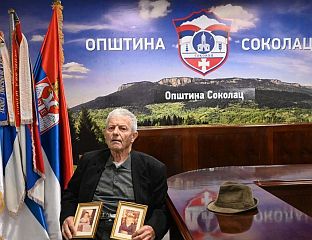
NIKO KOŠARAC REMEMBERS LOSING TWO SONS, MEMBERS OF ILIJAŠ BRIGADE, IN THE SAME DAY
SOKOLAC, OCTOBER 19 /SRNA/ – Niko Košarac of Sokolac today recounted to the Republika Srpska Memorial Centre how his sons, Spasimir and Milomir, were...
22 hours ago

SACRED SITES OF ST. PETERSBURG EXHIBITION OPENS
ISTOČNO NOVO SARAJEVO, OCTOBER 19 /SRNA/ – An exhibition of artistic photographs titled "Sacred Sites of St. Petersburg" by Miodrag Branković, showcas...
23 hours ago

TEN BiH COMPANIES PROMOTE FOOD PRODUCTS AT PARIS TRADE FAIR
PARIS, OCTOBER 19 /SRNA/ – Ten companies from BiH's food sector are showcasing their products at SIAL 2026, one of the world's leading international f...
23 hours ago

POLICE SEEK 15 PEOPLE OVER ANTISEMITIC SLOGANS IN SPLIT
ZAGREB, OCTOBER 19 /SRNA/ – Croatian Interior Minister Davor Božinović said police were searching for 15 of the 23 people reported over antisemitic ch...
1 day ago
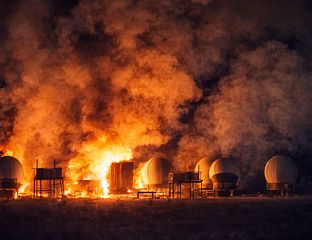
TWO GERMAN TEENAGERS SUSPECTED OVER STARLINK FIRE
SOFIA, OCTOBER 19 /SRNA-RIA Novosti/ – Two young men from Germany are suspected of setting fire to antennas belonging to the Starlink satellite commun...
1 day ago
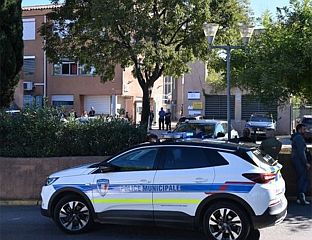
BOY, 13, WOUNDS STUDENT AND TEACHER IN KNIFE ATTACK
BUCHAREST, OCTOBER 19 /SRNA-Reuters/ – A 13-year-old pupil stabbed another student and a teacher in the northern Romanian city of Bistrița, police sai...